

Choosing the right shade of green can be challenging with so many options available. Some tones feel too bold, while others may look dull once applied. A balanced color that works well in different spaces can simplify the decision and create a calm, inviting atmosphere.
Muted Sage by Behr offers a soft, natural green that blends comfort with versatility. It adapts to different lighting, pairs well with a range of furnishings, and adds a subtle touch of nature to interiors without overwhelming the room.
If you’re exploring other soft green options, Sherwin Williams Sea Salt offers a coastal-inspired alternative that shifts beautifully with natural light.
Key Takeaways
- Learn what makes this shade unique and versatile
- See how it works in different spaces and settings
- Get practical tips for pairing and upkeep
Understanding Muted Sage by Behr
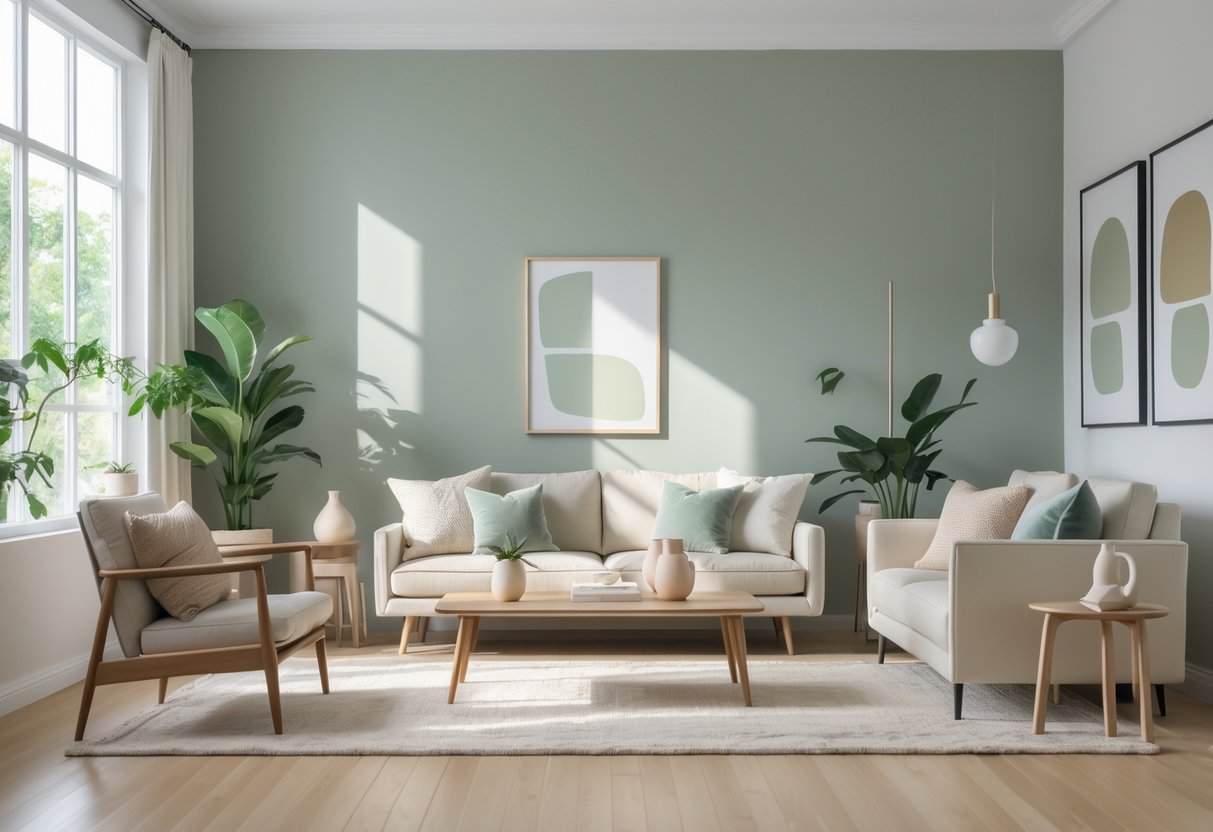
Muted Sage by Behr offers a calm balance between green and gray, making it versatile for many interiors. The color leans toward a soft, natural green but carries enough gray to keep it grounded and neutral. This balance allows it to feel both fresh and subtle without overwhelming a room.
The undertones play a key role in how Muted Sage appears throughout the day. In bright morning light, the green tones stand out more clearly, giving spaces a gentle, garden-like quality. As daylight fades, the gray undertones become more visible, creating a cooler and more subdued effect. This shifting quality makes the shade adaptable in different lighting conditions.
Key Traits of Muted Sage:
- Soft green with gray undertones
- Adapts to changing light
- Neutral enough to pair with many colors
The Light Reflectance Value (LRV) of this shade is 28, which means it absorbs more light than it reflects. This lower LRV helps create a cozy and intimate atmosphere, especially in larger or well-lit rooms.
For contrast, a much deeper option like Benjamin Moore Wrought Iron delivers bold drama while maintaining versatility.
Room Impact at a Glance:
| Setting | Effect of Muted Sage |
|---|---|
| Bright, open spaces | Adds warmth and balance |
| Small rooms | Works best with light accents |
| With decor/artwork | Provides a calm backdrop |
This makes Muted Sage a flexible choice for those seeking a color that feels both natural and steady.
Muted Sage Across Home Spaces (a visual style guide)
1. Family Gathering Areas
Muted Sage works well in shared living areas because it shifts gently with the light. Morning sun highlights its soft green side, while evening lamps bring out a calmer gray tone.
Ideas to try:
- Pair with linen or cotton sofas for a natural look
- Use wood furniture to add warmth
- Frame with white trim for a crisp edge
| Lighting | Effect on Color |
|---|---|
| Morning sunlight | Fresh green glow |
| Evening lamps | Warm gray depth |
Tip: Place a lamp in a corner to create soft layers of light.
2. Restful Sleeping Spaces
In bedrooms, this shade feels both fresh and calming. During the day, it looks airy and clear, but at night, it softens into a more private and restful tone.
Pairings that work well:
- White or cream bedding for contrast
- Light wood furniture for warmth
- Pale gray rugs for balance
- Bedside lamps with warm bulbs to keep the color steady
This balance makes the room feel both clean and inviting without being overwhelming.
3. Cooking and Dining Areas
Muted Sage adapts well in kitchens, especially with layered lighting. Natural daylight keeps it lively, while under-cabinet lights bring out its subtle green base.
Best combinations:
- Stainless steel appliances for a modern touch
- White cabinets for a sharp contrast
- Pendant lights to add warmth over counters or islands
| Feature | Effect |
|---|---|
| Under-cabinet lights | Highlights green tones |
| Pendant lights | Adds cozy glow |
This shade keeps the space practical while still feeling stylish.
4. Utility and Laundry Areas
Laundry rooms benefit from this color because it stays bright under both natural and artificial light. Even in small spaces, it feels clean and steady.
Advantages:
- Makes white machines look newer
- Brings interest to a task-focused room
- Hides small dust or lint marks
- Works well with focused task lighting
Tip: Add lighting under shelves to brighten work zones without losing the soft tone of the walls.
5. Washrooms and Bath Spaces
In bathrooms, Muted Sage changes with the type of light. Sunlight through frosted glass makes it feel fresh, while vanity lights reveal a softer gray side.
Good pairings:
- Chrome or brushed nickel fixtures
- White tile for a crisp backdrop
- Vanity lights for a spa-like glow
This color helps bathrooms stay bright and clean while still feeling calm and balanced.
Furniture to Pair with Muted Sage
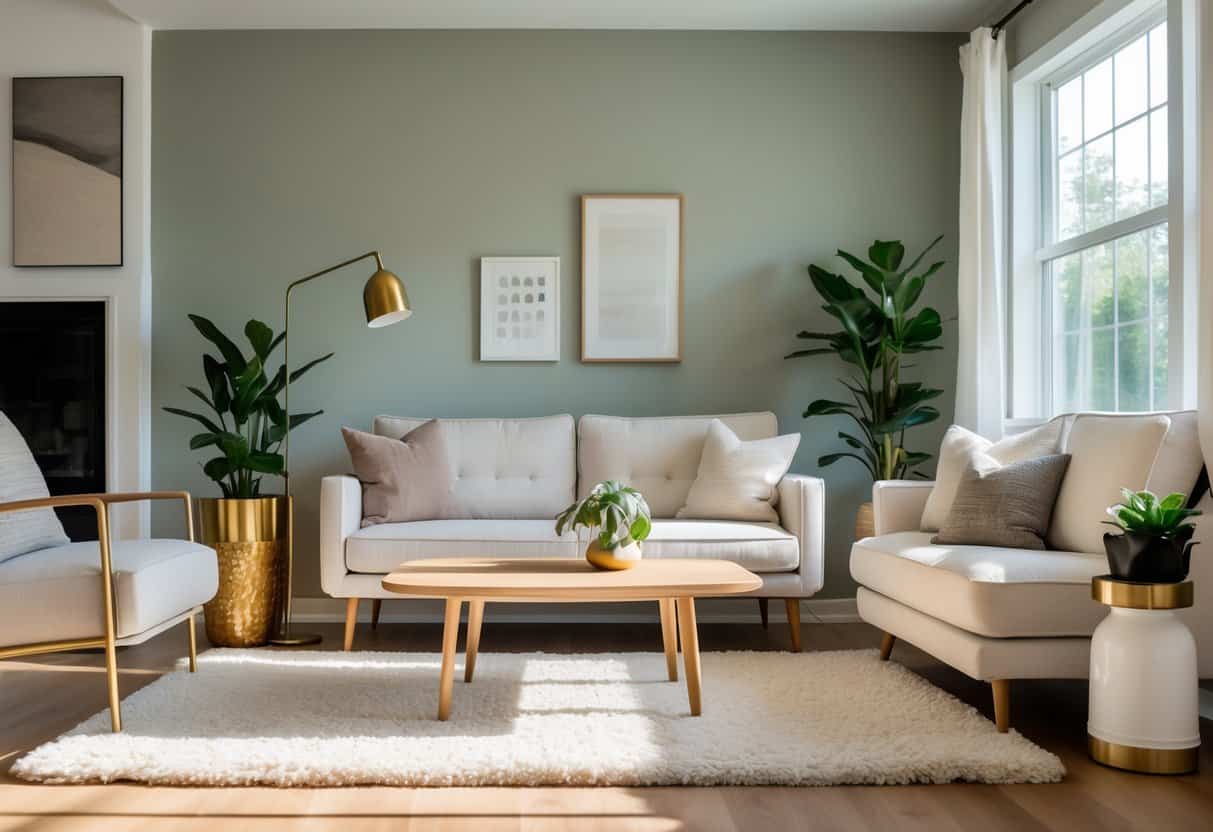
Muted sage works well with a variety of furniture finishes and fabrics. Natural woods bring warmth, while soft textiles and metals create balance. Mixing these elements keeps the space grounded and inviting.
Natural Wood Options
- Oak adds warmth and texture
- Walnut provides a deeper contrast
- Pine keeps the look relaxed
- Bamboo introduces a light, airy touch
Upholstered Choices
- Cream linen sofas feel fresh
- Light gray velvet chairs soften the space
- White cotton upholstery looks crisp
- Tan leather balances with warmth
Metal Accents
| Finish | Effect |
|---|---|
| Brass | Subtle shine |
| Black | Modern edge |
| Bronze | Gentle warmth |
| Chrome | Clean look |
Accent Pieces
- Glass tables reflect light
- Rattan baskets add texture
- White ceramic stands look neat
- Natural fiber ottomans bring comfort
Comparison with Other Close Shades
Muted Sage sits in the middle of several green tones, making it useful to compare against nearby options. While it blends gray and green evenly, other shades lean lighter, darker, or warmer. This helps highlight where Muted Sage stands out in balance and usability.
Key Differences:
| Shade | Tone | LRV | Best Use | Difference from Muted Sage |
|---|---|---|---|---|
| Garden Wall | Olive green | 25 | Dining rooms, studies | More brown undertones |
| Clary Sage | Cool green | 32 | Kitchens, bathrooms | Lighter, with a blue hint |
| October Mist | Silvery green | 46 | Bedrooms, offices | Much lighter, carries more gray |
| Soft Sage | Pale green | 51 | Small spaces, bathrooms | Significantly lighter, less gray |
| Dried Sage | Deep green | 22 | Accent walls, exteriors | Darker and more saturated |
Advantages of Muted Sage:
- Balanced mix of gray and green
- Performs well in both bright and dim light
- Mid-tone depth hides marks effectively
- Pairs smoothly with most wood finishes
Maintenance and Care
Keeping painted walls in good condition requires steady upkeep and gentle handling. Regular attention helps the color stay even and prevents long-term damage.
Simple routines include:
- Dusting surfaces with a microfiber cloth once a week
- Using a feather duster for corners and edges
- Allowing natural light but keeping curtains open to reduce uneven fading
Cleaning steps to follow:
- Wipe marks with warm water and a soft sponge
- Test any cleaner on a hidden area first
- Address spills quickly to avoid stains
- Mix mild dish soap with water for tougher spots
- Clean using up-and-down strokes
- Avoid heavy scrubbing that can leave shiny patches
Protective habits:
| Action | Benefit |
|---|---|
| Keep furniture slightly away from walls | Reduces scuffs |
| Add door stoppers | Prevents knob dents |
| Balance humidity indoors | Limits paint damage |
| Inspect for leaks | Stops water stains |
| Clean vents often | Lowers dust buildup |
Wrapping It Up
Muted Sage offers a calm and steady look that works well in many settings. Its soft gray-green base makes it easy to pair with both modern and classic pieces. This flexibility allows it to fit into bedrooms, living areas, or even outdoor spaces without feeling out of place.
When comparing paint choices, some shades stand out for different moods:
| Paint Color | Style It Creates |
|---|---|
| Shade Grown | Deep, moody atmosphere |
| Redend Point | Warm, earthy character |
| Oyster Bay | Light, coastal influence |
Muted Sage sits in the middle, offering balance without leaning too dark or too light. This makes it a reliable option for people who want a natural tone that blends easily.
A few simple ways to use it include:
- Pairing it with wood accents for warmth
- Mixing it with light neutrals for a softer look
- Adding darker trim for contrast
The color also works well with different textures, from smooth finishes to natural fabrics. Its adaptable nature gives homeowners room to experiment without overwhelming a space.
Behind these insights is the guidance of Alex Guerrero, an experienced designer with years of work in color and style. His background in both fashion and fine arts shapes a practical yet creative approach. This perspective helps highlight how shades like Muted Sage can bring comfort and harmony into everyday spaces.
Frequently Asked Questions
Which color schemes work well with Behr’s muted sage in interior spaces?
Behr’s muted sage pairs well with soft neutrals like beige, ivory, and light gray. For more contrast, it can be matched with deep tones such as charcoal, navy, or rich brown. Warm metallics like brass or gold also add balance and depth.
How does Behr’s muted sage affect the feel of a room?
This shade creates a calming and grounded atmosphere. Its soft green undertone can make a space feel more open and restful, especially in smaller rooms. It brings a natural, balanced look without overwhelming the design.
What lighting conditions highlight Behr’s muted sage best?
Natural light brings out the soft green tones and keeps the color fresh. In low light, the shade appears more subdued and earthy. Warm white bulbs can enhance its cozy quality, while cool lighting emphasizes its gray undertones.
Which design styles complement Behr’s muted sage?
Muted sage works well in modern farmhouse, Scandinavian, and minimalist interiors. It also blends with traditional and transitional styles when paired with classic wood finishes. The color’s versatility makes it suitable for both casual and formal spaces.
What accent shades pair effectively with Behr’s muted sage?
- Warm neutrals: cream, tan, taupe
- Deep tones: navy, charcoal, espresso brown
- Soft contrasts: blush, dusty rose, pale yellow
- Metallics: gold, bronze, brushed nickel
These accents can be used in textiles, furniture, or decorative pieces.
How can Behr’s muted sage be used on a home’s exterior?
It works well as a main siding color or as an accent on shutters, doors, or trim. Pairing it with crisp white or warm beige creates a clean look. Darker tones like black or deep gray can add contrast for a more modern exterior.
